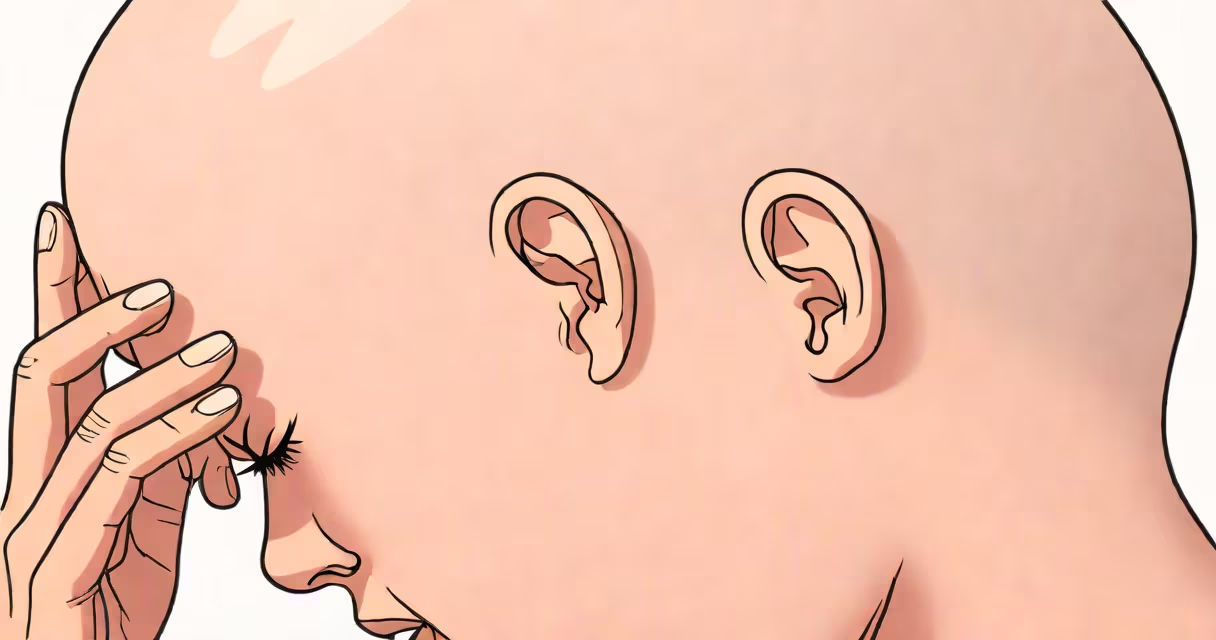
A bald spot itching occurs when a patch of hair loss is accompanied by discomfort, burning, or tingling on the scalp. This symptom often signals inflammation, infection, or autoimmune activity affecting hair follicles.
Itching in a bald spot is not normal hair loss. While hair shedding happens daily, a new bald patch with persistent itch suggests an active process beneath the skin. The sensation arises from nerve endings in the dermis responding to irritation, immune cell infiltration, or fungal colonization.
Common causes include alopecia areata, seborrheic dermatitis, tinea capitis (scalp fungus), and traction alopecia from tight hairstyles. Not all bald spots itch, but when they do, it's a sign to investigate further rather than ignore.
When hair follicles are damaged or inflamed, immune cells migrate to the area. These cells release cytokines-signaling proteins that trigger nerve sensitivity. The result is itch, even if no visible rash exists.
For example, in alopecia areata, the immune system attacks hair follicles as if they were foreign invaders. This leads to sudden hair loss and often intense itching. A 2021 study in JAMA Dermatology found that 63% of patients with alopecia areata reported pruritus (itching) during flare-ups, with most describing a "burning" or "pins-and-needles" sensation.
Fungal infections like tinea capitis also cause itching. The fungus feeds on keratin in hair shafts, leading to brittle strands and broken hairs. As the infection spreads, it irritates the scalp surface and triggers inflammation. Without treatment, patches grow larger and may leave permanent scarring.
Not all bald spots with itching are the same. The underlying cause determines symptoms, progression, and treatment. Below are key types:
| Type | Key Features | Typical Itch Sensation | Common Triggers |
|---|---|---|---|
| Alopecia areata | Sudden round bald patches; may progress to total scalp loss (alopecia universalis) | Burning, sharp, or electric-like | Autoimmune dysfunction; stress; genetics |
| Traction alopecia | Thinning along the hairline or crown; often linked to braids, ponytails, or extensions | Dull ache or localized stinging | Chronic tension from hairstyles; friction |
| Seborrheic dermatitis | Oily flakes, redness, crusting; often affects scalp, eyebrows, behind ears | Itchy, greasy, or raw feeling | Malassezia yeast overgrowth; hormonal shifts |
| Tinea capitis | Scaly, inflamed patches; broken hairs; sometimes pus-filled bumps | Intense, spreading itch | Fungal exposure; warm, humid environments |
One non-obvious distinction: traction alopecia rarely causes itching early on. Instead, pain from tension builds gradually. Itching appears later, often due to secondary infection or scalp dryness. This delays diagnosis-people assume the issue is "just" hair thinning from styling.
I once saw a patient with a bald spot near her part who had worn high ponytails for five years. She reported no itch until she developed a crusty lesion. A biopsy confirmed bacterial folliculitis secondary to trauma. Removing the hairstyle stopped progression, but healing took six months with topical antibiotics.
Itching in a bald spot should prompt medical evaluation within four weeks. Delaying care increases risk of permanent hair loss and scarring.
The American Academy of Dermatology (AAD) recommends seeing a dermatologist if a bald spot appears in less than two weeks, especially with redness, scaling, or oozing. A blood test may check for autoimmune markers like antinuclear antibodies (ANA), and a scalp biopsy can confirm inflammation patterns.
For suspected fungal infection, a potassium hydroxide (KOH) prep test confirms presence of hyphae. A positive result requires oral antifungals like terbinafine-topical treatments alone are ineffective.
Home remedies like tea tree oil or dandruff shampoos may help mild seborrheic dermatitis. But they won't resolve alopecia areata or fungal spread. Misdiagnosis is common: a 2020 review in Clinical and Experimental Dermatology showed that 41% of patients initially treated for dandruff actually had alopecia areata.
Many confuse bald spot itching with dry scalp or product buildup. Dryness causes flaking and mild itch, but doesn't lead to complete hair loss. A true bald spot with no regrowth after 60 days indicates deeper pathology.
Another error: assuming all hair loss is genetic. Androgenetic alopecia (male/female pattern baldness) typically progresses slowly over years. It rarely causes itching unless complicated by seborrhea or poor hygiene.
Black men are disproportionately affected by certain forms of scalp inflammation. A 2022 study in Journal of the American Academy of Dermatology found that Black males have higher rates of central centrifugal cicatricial alopecia (CCCA), which causes progressive scarring and itching. Early signs include a shrinking bald patch at the crown and a tight, painful scalp. Treatment focuses on reducing inflammation with corticosteroids and avoiding heat and chemical relaxers.
If you have a bald spot with persistent itching, stop using harsh shampoos and avoid tight hairstyles. Do not scratch-the skin barrier weakens, increasing infection risk.
See a dermatologist for diagnosis. They may perform a scalp examination, culture, or biopsy. Early intervention prevents irreversible damage. For example, treating alopecia areata within six months improves remission chances by 60%, according to the National Alopecia Areata Foundation.
Understanding bald spot itching isn't about fear-it's about recognizing your body's signals. It's not just a cosmetic issue. It's a health signal. Address it early. Your scalp-and future hair-will thank you.