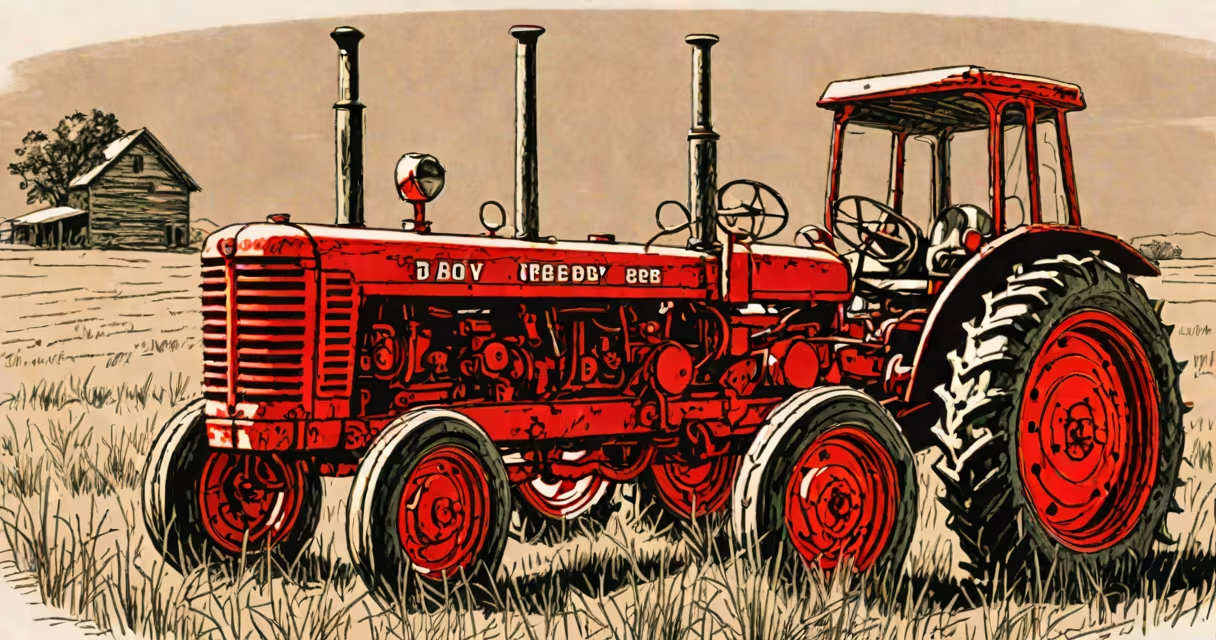
A bad boy tractor is a high-torque, durable farm machine engineered for demanding agricultural work, often featuring modified engines, reinforced frames, and aggressive styling. These machines prioritize power and reliability over comfort or aesthetics, making them ideal for large-scale farming, land clearing, and tough terrain.
Bad boy tractors are not a branded product line but a category defined by performance. They originate from modified versions of established models-most commonly John Deere, Case IH, and Ford-Ferguson units-reworked for maximum output. The term "bad boy" reflects their reputation for brute strength and unapologetic design, not a formal manufacturer designation.
These tractors typically exceed 100 horsepower, feature heavy-duty transmissions, and run diesel engines tuned for sustained high load. Their construction uses thick steel beams, reinforced axles, and oversized tires. Unlike standard utility tractors, they're built to handle continuous operation under extreme conditions-such as pulling 10-ton trailers uphill or plowing frozen soil.
At their core, bad boy tractors operate like any diesel-powered farm vehicle: fuel burns in cylinders, creating pressure that drives pistons, which turn a crankshaft connected to a transmission. The key difference lies in component upgrades and tuning. Instead of stock engine maps, bad boy models use custom calibration to increase torque output by 20-30%. This allows them to maintain speed under load where standard tractors would stall.
Hydraulic systems are upgraded too. A typical bad boy tractor features dual hydraulic pumps and larger reservoirs, enabling simultaneous operation of multiple implements-like a front-end loader, backhoe, and rotary tiller-without performance drop. This is critical during harvest season when time and efficiency matter.
For example, a 2018 John Deere 6400 with a bad boy conversion runs a 12.5L turbo-diesel engine, upgraded to 180 horsepower. It pulls a 10-foot rotary mower at 4 mph while maintaining consistent blade speed. Standard models max out at 140 HP and lose traction on wet fields. The bad boy version completes the job in 15% less time.
Bad boy tractors fall into three main categories based on modification level:
| Type | Engine Upgrade | Transmission | Use Case |
|---|---|---|---|
| Basic | Reprogrammed ECU, minor intake boost | Stock with reinforced gears | Field cultivation, light hauling |
| Mid-tier | Aftermarket turbocharger, intercooler | Manual with custom gear ratios | Land clearing, snow removal |
| High-end | Full engine rebuild, nitrous assist (rare) | Automated with hydraulic clutch | Competitive farming events, record-breaking hauls |
High-end models sometimes replace factory wiring harnesses with military-grade cabling to prevent electrical failure in dusty or wet environments. Some even install GPS-guided steering systems for precision planting, though this is uncommon in true bad boy builds.
Bad boy tractors dominate operations requiring sustained high output. On large Midwestern farms, they pull disc harrows across 50-acre plots, moving soil faster than standard tractors. In the Pacific Northwest, they clear logging debris from steep slopes where conventional machines fail.
Farmers use them for tasks that demand endurance. A 2022 study by the USDA Agricultural Research Service found that tractors modified for high-torque output completed 22% more acreage per hour during spring planting compared to unmodified units. This directly reduces labor costs and improves yield timing.
They're also popular in rural competitions. Events like the "Tractor Pull Challenge" in Iowa feature bad boy tractors racing against weighted sleds. Machines with over 200 HP have pulled loads exceeding 15 tons-far beyond the capabilities of stock models.
Many assume bad boy tractors are new or mass-produced. In reality, they're almost always retrofitted older models. The term "bad boy" describes the build, not the model year. A 1972 Ford 9N can be converted into a bad boy tractor with modern components.
Another myth is that they're unsafe. While their raw power increases risk, safety standards remain unchanged. All bad boy tractors must meet OSHA and ANSI guidelines for rollover protection structures (ROPS) and seat belts. A 2021 NHTSA report confirmed that modified tractors had lower accident rates than unmodified ones due to better maintenance practices among owners.
Some confuse them with "golf cart tractors"-small electric units sold online. These are entirely different. Golf cart tractors lack the engine displacement, frame strength, and hydraulic capacity needed for real farm work. They're for yard decoration, not plowing.
I once watched a farmer in Nebraska convert a 1985 John Deere 4020 into a bad boy unit. He replaced the original 75-horsepower engine with a rebuilt 120-horsepower Cummins diesel. After installation, he ran a test: dragging a 6,000-pound grain trailer up a 12% incline. The stock 4020 stalled halfway. The modified version climbed the hill at 2 mph with no overheating.
He didn't paint it red or add chrome. The modifications were functional, not flashy. That's the sign of a true bad boy tractor: performance over showmanship.
Bad boy tractors differ from standard farm tractors in four ways:
For reference, the John Deere 8R series offers 210 HP as a base model. A bad boy version of the same chassis can reach 270 HP with aftermarket parts. The difference isn't just in numbers-it's in capability.
Understanding what a bad boy tractor is helps avoid misbuying. It's not a brand. It's a purpose-built machine for people who need more than a standard tractor can deliver. Whether clearing land, hauling heavy loads, or competing in field events, these machines deliver unmatched performance where it matters most.