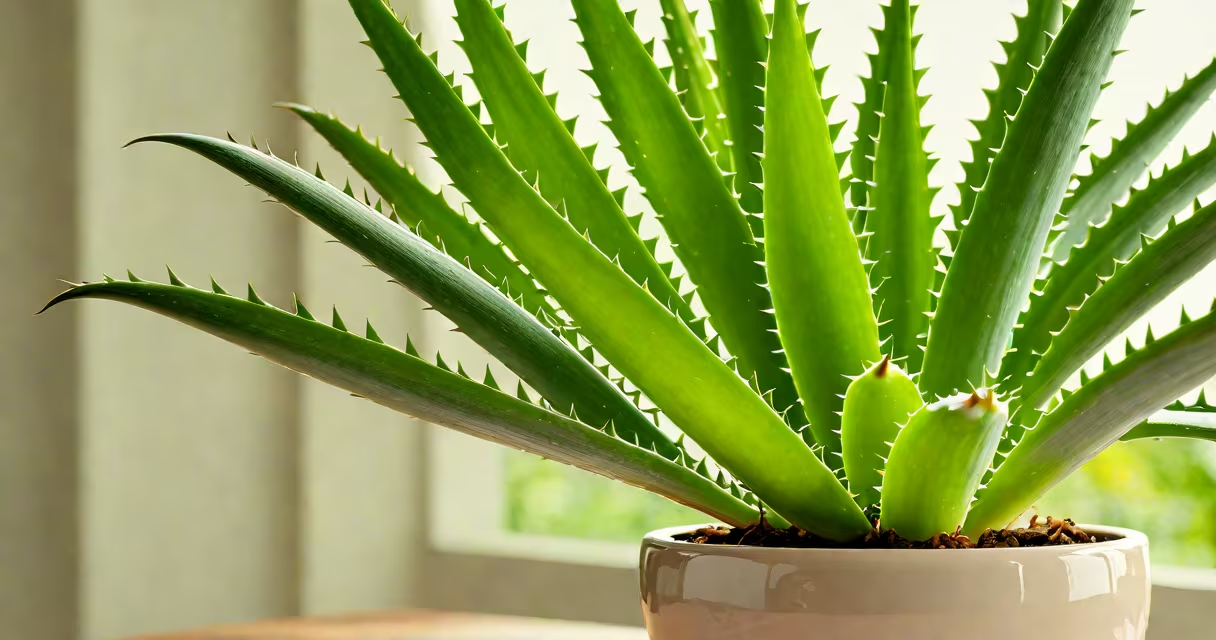
Aloe plant care involves providing bright indirect light, infrequent watering, and well-draining soil to prevent root rot. These drought-tolerant succulents thrive in dry conditions and require minimal attention once established.
Aloe plants originate from arid regions of Africa and the Arabian Peninsula. Their thick, fleshy leaves store water, allowing them to survive long periods without moisture. This adaptation makes them ideal for indoor environments with low humidity and consistent temperatures. Overwatering remains the most common cause of failure in aloe plant care, leading to mushy roots and eventual death.
Light is critical. Aloe plants need at least six hours of bright, indirect sunlight daily. Direct sun through a window can scorch leaves, especially in summer. Place the plant near a south- or east-facing window. If natural light is insufficient, use a full-spectrum LED grow light positioned 12 inches above the plant for 12 hours per day.
Use a cactus or succulent mix with added perlite or pumice to ensure rapid drainage. Standard potting soil retains too much moisture and increases the risk of root rot. Choose a pot with drainage holes-preferably terracotta or unglazed ceramic-to allow excess water to escape.
Water only when the soil is completely dry. Stick your finger 2 inches into the soil; if it feels dry, water thoroughly until runoff appears from the drainage hole. Empty the saucer afterward. In winter, reduce watering to once every 3-4 weeks. During spring and summer, water every 2-3 weeks.
Overwatering symptoms include yellowing lower leaves, soft stems, and a foul odor from the soil. Underwatering causes wrinkled or shriveled leaves, but this is less dangerous than overwatering. A healthy aloe plant maintains firm, plump leaves even during dry spells.
| Season | Watering Frequency | Light Requirement |
|---|---|---|
| Spring/Summer | Every 2-3 weeks | 6+ hours bright indirect light |
| Fall/Winter | Every 3-4 weeks | Same as above |
Many people treat aloe like a houseplant that needs regular watering. This leads to root rot within weeks. The USDA notes that overwatering causes more aloe plant failures than any other factor. Aloe plants do not benefit from misting or high humidity-they prefer dry air.
Another error is using a pot that's too large. A large container holds excess moisture, even if the soil drains well. Keep the pot size proportional to the plant's root mass. A 6-inch pot suits a mature aloe plant with a 10-inch spread.
If you notice soft, brown leaves, remove them with clean scissors. Cut back to healthy tissue. Do not pull leaves-this damages the stem. If the entire base is mushy, the plant may be beyond saving. However, healthy offsets (pups) growing at the base can be separated and replanted.
Propagate aloe plants by removing offsets that grow at the base. Allow the cut end to callus over for 2-3 days before planting in fresh succulent soil. Keep the new plant in bright light and avoid watering for a week. Root development takes 3-4 weeks.
Repot every 2-3 years in spring. Gently remove the plant, shake off old soil, inspect roots for rot, and trim damaged parts. Replant in a slightly larger pot with fresh mix. Avoid fertilizing during repotting-wait until new growth appears.
Prune dead or damaged leaves at the base. Use sterilized shears to prevent infection. Aloe produces a gel inside its leaves used medicinally, but harvesting it requires cutting a leaf at the base. Only take one leaf per plant per year to avoid stressing the plant.
Some assume aloe plants need frequent feeding. They don't. Fertilizing encourages weak, leggy growth and reduces the plant's ability to store water. The University of Florida IFAS Extension confirms that aloe vera grows best without fertilizer.
Others think aloe thrives in low light. While it survives in dim rooms, it won't thrive. Growth slows, leaves stretch toward light (etiolation), and color fades. Aloe plants grown in low light lose their compact form and become floppy.
Another misconception: aloe plants are toxic to pets. According to the ASPCA, aloe vera is mildly toxic to cats and dogs. Ingestion can cause vomiting, diarrhea, and lethargy. Keep the plant out of reach of curious pets.
I once rescued an aloe plant from a friend's apartment. It sat in a dark corner with a plastic pot and wet soil. Leaves were yellow and mushy. I removed it from the pot, trimmed all rotten roots, and cleaned the remaining healthy roots with a damp cloth. I repotted it in a 6-inch terracotta pot with cactus mix. After a week of no water, new growth emerged from the center. Within two months, the plant regained firm leaves and produced two pups.
This case shows that aloe plants can recover from severe neglect if caught early. The key was stopping the moisture cycle and improving drainage-two fundamentals of proper aloe plant care.
For more guidance on caring for succulents and similar drought-tolerant plants, explore our detailed care guide.